The Molyar Resource Foundation, in collaboration with University of Southampton, organized a high-level seminar on the theme “Fostering Resilience: Sustainable Development and Eco-Tourism in the Himalayas” at India International Centre on 7/5/206. The seminar brought together eminent academicians, policymakers, tourism professionals, environmental experts, entrepreneurs, social leaders, and community representatives to discuss the growing environmental and developmental challenges facing the Himalayan region. The discussions focused on promoting sustainable tourism, ecological protection, community participation, climate resilience, and balanced development in mountain ecosystems.
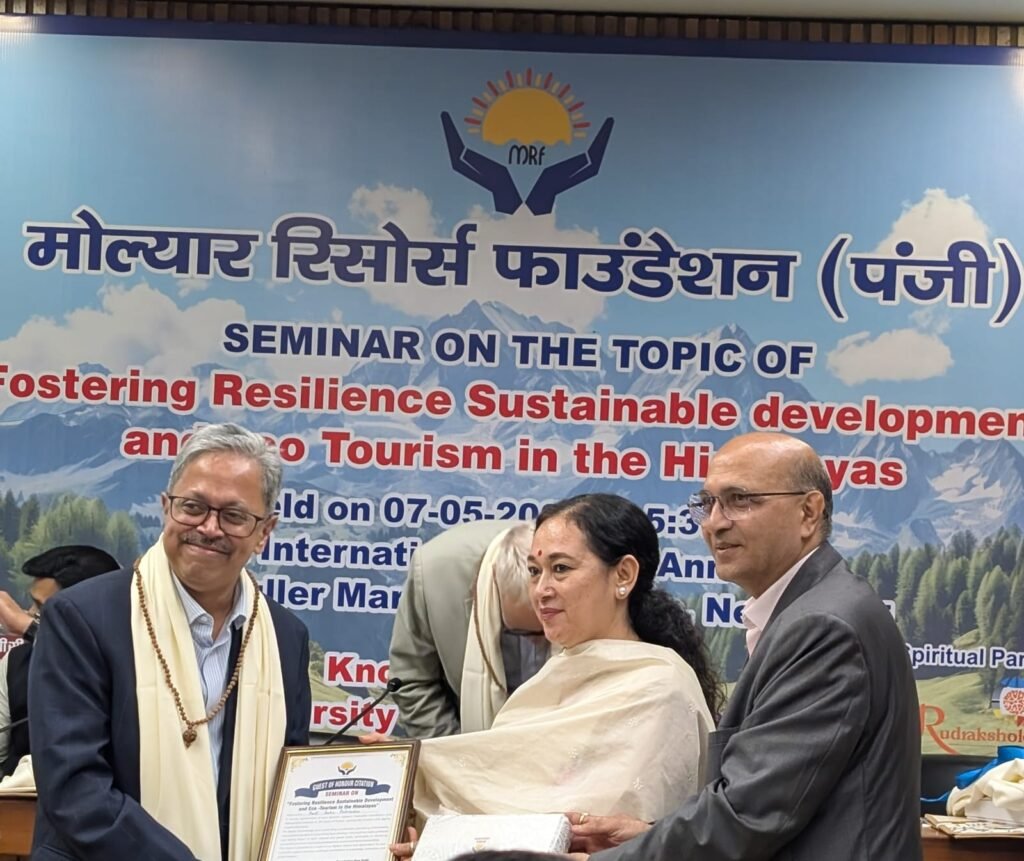
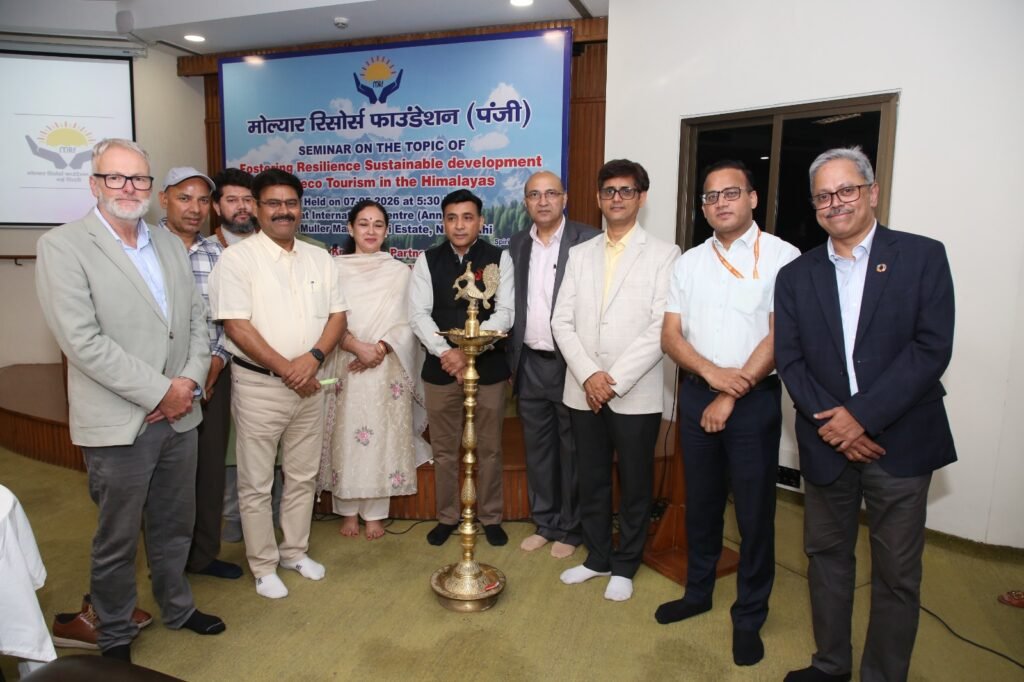
The programme commenced with the traditional Lighting of the Lamp and Saraswati Vandana, symbolizing wisdom, harmony, and collective progress. Mrs. Seema Bhandari and Shri Durga Singh Bhandari, on behalf of the Molyar Resource Foundation, welcomed the distinguished guests with planters, shawls, and mementoes that reflected the spirit of sustainability and Indian hospitality.
Shri Durga Singh Bhandari, Chief Coordinator of the Molyar Resource Foundation and Former General Manager (HR), ONGC, inaugurated the seminar with an address on the “development-disaster paradox” in the Himalayas. He expressed concern that uncontrolled tourism and rapid infrastructure expansion are placing tremendous pressure on fragile mountain ecosystems while providing limited long-term benefits to local communities. He emphasized the urgent need for responsible ecotourism and called upon researchers, industry leaders, policymakers, and local communities to work together to achieve sustainable and environmentally responsible development.
During the seminar, Sabu S. Padmadas formally announced a collaboration between the Molyar Resource Foundation and the University of Southampton, particularly the University India Centre for Inclusive Growth and Sustainable Development and the Sustainability and Resilience Institute, for undertaking innovative and action-oriented initiatives related to sustainability and eco-tourism. He presented a special insignia to Shri Durga Singh Bhandari to mark the beginning of this partnership. Shri Bhandari thanked the University and assured that meaningful and practical initiatives would be implemented in a planned and systematic manner.
B. W. Pandey, Professor in the Department of Geography at University of Delhi and Director of the Centre for Himalayan Studies, delivered an important lecture based on decades of field research in the Himalayan region. He described the Himalayas as the “third pole” of the Earth and a major global water source that supports nearly half of the world’s population. He highlighted the alarming environmental degradation taking place due to unplanned urbanization, unsafe road construction, and uncontrolled tourism. Prof. Pandey explained that many landslides in Uttarakhand occur along vulnerable road corridors and that increasing tourist traffic contributes to black carbon deposition in fragile glacier regions. He strongly advocated the adoption of the “DZUMA” policy framework implemented in Sikkim and promoted the concept of “green tourism” to minimize ecological damage in sensitive mountain areas. He also explained the close relationship between the Himalayas and global climatic systems such as El Niño and the Indian Ocean Dipole.
In his keynote address, Craig Hutton, Director of the Sustainability and Resilience Institute at the University of Southampton, spoke about the changing meaning of sustainability in the modern world. He emphasized that sustainable tourism must protect local culture, strengthen local economies, preserve traditional lifestyles, and safeguard natural heritage. He warned against the “McDonaldisation” of society, where excessive commercialization leads to the loss of cultural identity and traditional practices, especially in mountain communities.
Prof. Sabu S. Padmadas also presented several international initiatives related to sustainable development and global health. He discussed the AYURYOG initiative, which promotes the integration of Ayurveda and Yoga as preventive and holistic healthcare systems at the global level. He emphasized the importance of behavioural change among tourists and service providers and shared examples from Rwanda and Oman, including the use of AI-based tourism management systems. He highlighted the importance of “people-to-people connectivity” and the role of science and technology in shaping effective public policy.
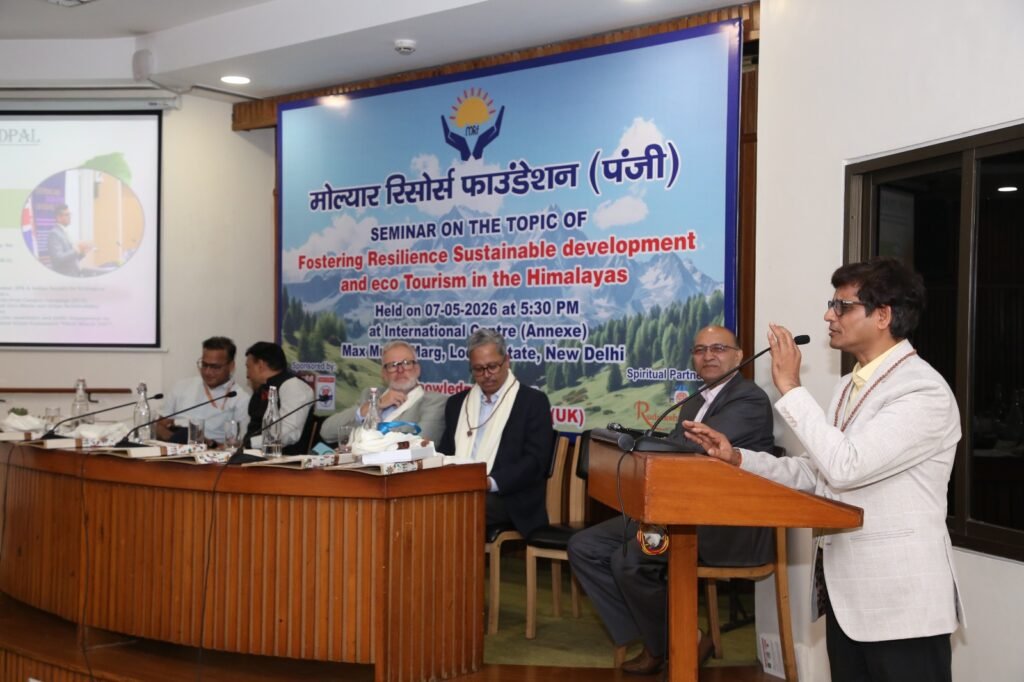
Ravi Gosain, President of the Indian Association of Tour Operators and Managing Director of Erco Travels, presented an industry perspective on Himalayan tourism. He stressed that tourism must be environmentally responsible, economically beneficial, culturally sensitive, and community-oriented. He called for a shift from “mass tourism” to “mindful tourism” and emphasized the promotion of local food, handicrafts, traditional culture, and community homestays to ensure inclusive development. He also urged that conferences and seminars should lead to concrete action plans and policy implementation.
Abdul Qayyum, Director (Technical) and Deputy CEO of the National Medicinal Plants Board under the Ministry of AYUSH, Government of India, spoke about biodiversity conservation and environmental policy. He highlighted the increasing threat to endemic Himalayan species such as the Brahma Kamal and the Black-Necked Crane due to human pressure and environmental degradation. He shared examples of selective and responsible tourism models from the Andaman Islands and discussed the Government’s “e-Forest Fire” monitoring programme for analytical forest fire management.
Major Gorki Chandola (Retd.), social entrepreneur and founder of Pathaal Homestay and Pathaal Agro in Uttarakhand, presented a successful model of community resilience and rural transformation. His initiatives address climate vulnerability, migration, education gaps, and sustainable livelihood generation. He highlighted programmes such as “Run Bhula Run Bhuli,” community sports and cultural events, the Adarsh Model Green School, AI conclaves in the hills, and the Pathaal Homestays initiative that revives abandoned Himalayan homes as sustainable community enterprises.
Renowned singer, composer, lyricist, and director Virender Negi Rahi shared an emotional cultural perspective on the Himalayan crisis through poetry and music. He remarked that “The Himalaya cannot shout, but it speaks through landslides and cloudbursts.” He emphasized that sustainability and ecotourism must become a way of life rather than remaining limited to academic discussions and warned against uncontrolled concrete construction in forested mountain landscapes.
Upendra Dutt Anthwal, Founder Director of Acuity Group of Companies, highlighted the important role of policymakers, entrepreneurs, and stakeholders in shaping sustainable tourism models. Drawing inspiration from the tourism development model of Narara Island in Gujarat, he advocated community-based tourism, local production systems, and cooperative development between Himalayan and non-Himalayan regions.
Prakash Chand Khandpal, Professor at the Centre for the Study of Law and Governance, Jawaharlal Nehru University and ICCR Chair of Indian Studies at the University of Southampton, highlighted Uttarakhand’s historic role in environmental movements such as the Chipko Movement. He warned that excessive tourism has significantly reduced the ecological carrying capacity of mountain regions and increased disaster vulnerability. Stressing that “behavioural change is the need of the hour,” he called upon tourists, local communities, and the tourism industry to adopt more responsible and environmentally conscious practices.
The seminar was organized with the valuable support from ONGC and HPCL.
The event concluded with the felicitation of distinguished guests and a collective commitment to work towards sustainable, resilient, community-centric, and environmentally responsible development models for the Himalayan region and future generations.